 Shazea Quraishi
Shazea Quraishi, who teaches her popular course Lighting the World: Writing in Times of Crisis, recommends her top 4 poems that demonstrate writing in response to times of crisis.
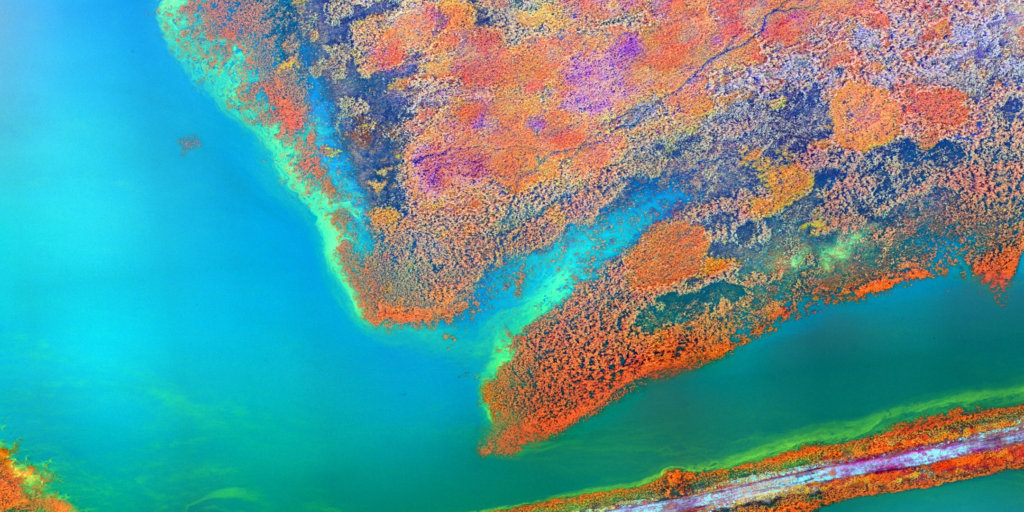
Image credit: @usgs
Crisis comes from the Greek ‘krisis’, meaning decision. In English it was first used in a medical context to refer to the decisive, turning point in the progress of a disease, and also refers to a situation that has reached a critical phase.
1. Personal Crisis
‘Little Father’ by Li-Young Lee
In this tender and moving poem by Li-Young Lee, he explores the timeless and multifaceted nature of love for his father, who lives on in him, even after death. The poem’s spare, spiritual qualities reflect the influence of classical Chinese poets, and Lee uses metaphor to speak to emotional truths and ‘get hold of something new and fresh’, as Aristotle said.
You can read the full poem here.
2. Political Crisis
‘Amman 1966’ by Ghassan Zaqtan (translated by Fady Joudah)
One way to take poetic action, is to read poems of witness, like this one by the Palestinian poet, novelist, and film maker, Ghassan Zaqtan, to inspire our own writing.
In this poem Zaqtan, who has lived in Jordan, Syria, Lebanon, and Tunisia, recounts ordinary and extraordinary details remembered of one year in exile. Understated, powerful.
You can find this poem at the bottom of this post.
3. Environmental Crisis
‘Wellwater’ by Karen Solie
The political is personal, the environment is personal… and it’s what makes this poem so powerful. Karen Solie has long been a poet I admire – for her social conscience, the combination of humility and conviction, but mostly for the quiet brilliance of her work, the attention to craft.
This poem begins with a memory of growing up on a farm in Saskatchewan (I’m not going to say what it does so brilliantly, just read it, you’ll see) and it ends with a sentence so matter-of-fact, it’s devastating.
You can hear Karen read her poem here.
4. Cultural Crisis
‘I Was Sleeping Where the Black Oaks Move’ by Louise Erdrich
Increasingly, I am drawn to the work of indigenous and First Nation writers, as a source of inspiration, consolation, and learning, which changes the way I think about the world.
Louise Erdrich, a member of the Turtle Mountain Band of Chippewa, is a beloved novelist (The Night Watchman is one of my favourite books) as well as being a wonderful poet.
In this poem about a river flooding, rather than focussing on its impact on the speaker, here is a river ‘helpless and terrible in its unfamiliar body’. It looks closely and connects profoundly with the natural world, of which humans are a small part. In this poem of just four stanzas, there is much to pay attention to, much to learn.
You can read the full poem here.
Shazea is running her Online Zoom course Lighting the World: Writing in Times of Crisis with us, starting Wednesday 20 May 2026. To find out more and to book your place please visit this page.
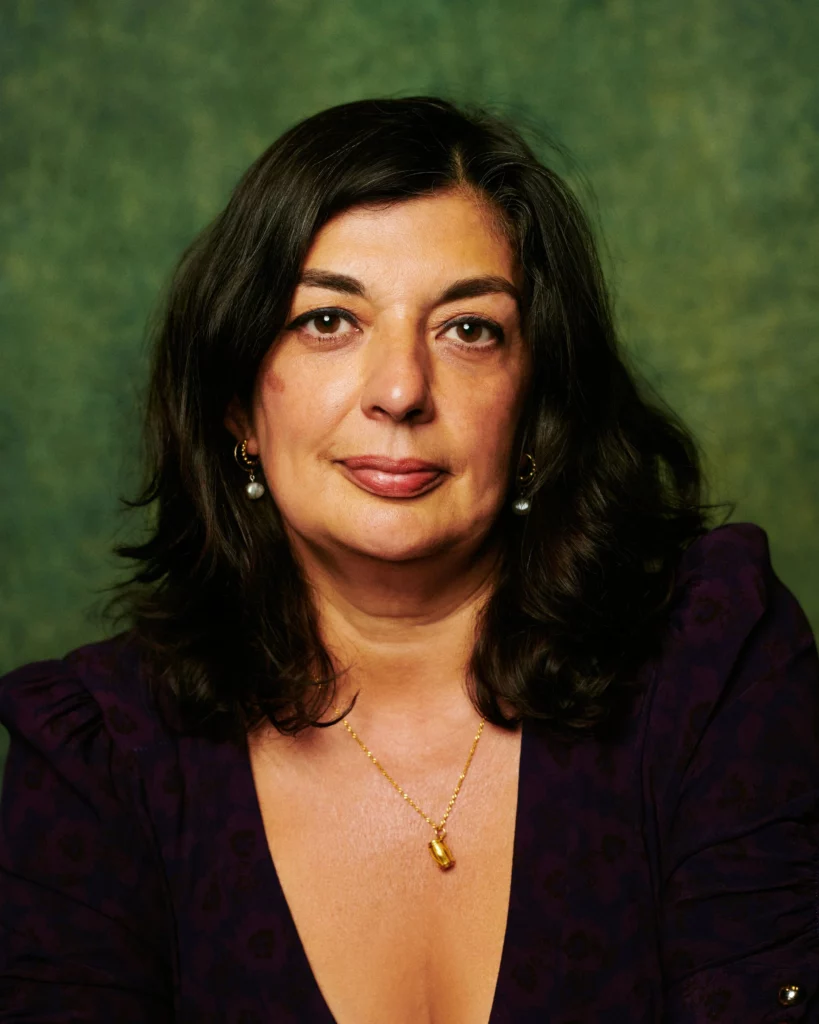
Shazea Quraishi is a Pakistani-born Canadian poet and translator based in London. Her poems have been published widely in the UK, US and Canada, including in The Guardian, The Financial Times, Poetry Review, Modern Poetry in Translation, and anthologised in Poetry: A Writer’s Guide and Anthology, Mapping the Future: the Complete Works Poets, and The Things I Would Tell You: British Muslim Women Write, among others.
Her books include The Glimmer (Bloodaxe Books, 2022), The Taxidermist (Verve Poetry Press, 2020), The Art of Scratching (Bloodaxe Books, 2015) and The Courtesans Reply (flipped eye publishing, 2012).
Shazea has performed her work at venues including Hay Festival, Ledbury Poetry Festival, Bradford Literature Festival, Edinburgh Book Festival and The Royal Festival Hall. She has received awards from the Royal Society of Literature, the British Council and Arts Council England.
She has taught for many years, with organisations including Arvon, The Poetry Society, Poetry Studio, Translators at School, English PEN, Exiled Writers and more.
Add your Reply
You must be logged in to post a comment.