 Poetry School
Cathy Galvin has been shortlisted for this year’s Laurel Prize 2026! Read more about her and her poem ‘Blunt Needles’ from her collection Ethnology.
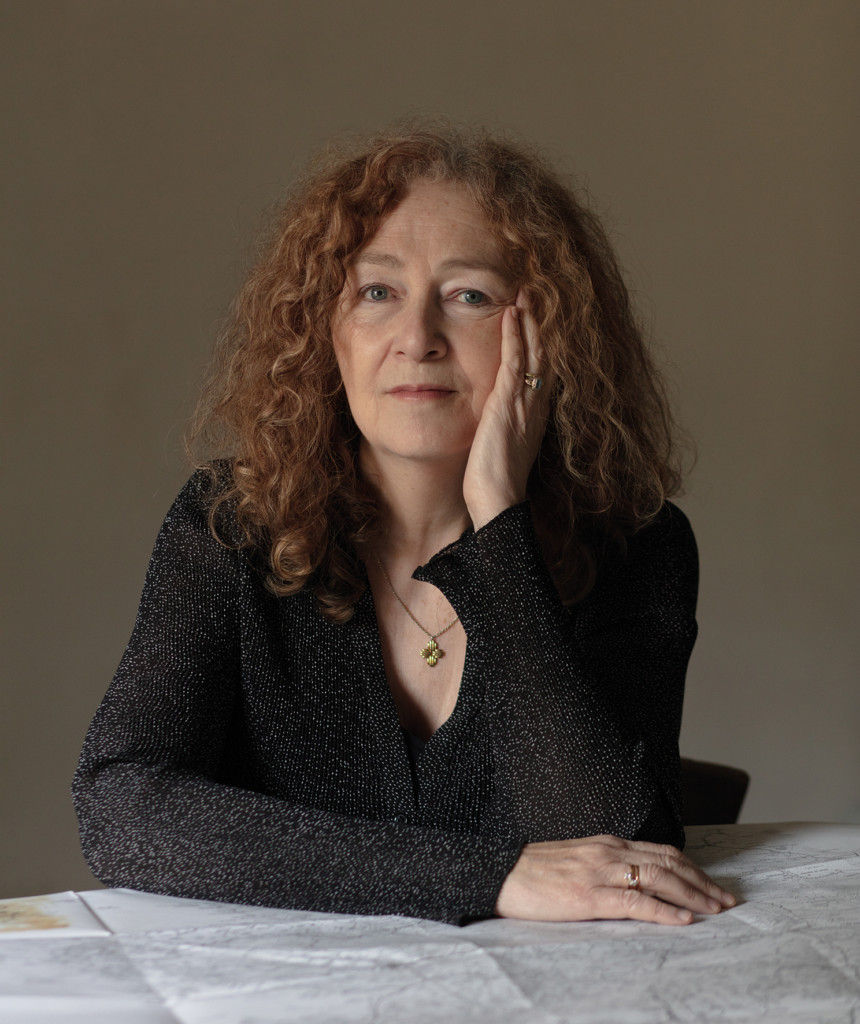
Image credit: Kinga & Maciej Krzyminscy
About Cathy
Cathy Galvin’s debut poetry book, Ethnology: a love song for Connemara (Bloodaxe Books, 2026), was longlisted for the Forward Prize for Best First Collection 2026. As a journalist, she worked as a senior editor for The Sunday Times. With roots in Coventry and Connemara, she now lives in Cornwall.
On being shortlisted
It’s a great honour to be a Laurel Prize finalist, to become part of a prize that offers an opportunity to look differently at the natural world humanity has shaped. Somewhere in the poetry of Ethnology are the voices of my near ancestors and their island community on the west coast of Ireland, reminding me that we are held within nature and we are held within history. Separation from the land leads to disaster. Who, after all, owns the land, the sea, the rivers? Who owns the people? When we lament what has been lost in our connection with the land we are serving a purpose for the future. Those who seemingly own everything, want us to forget.
It’s no surprise that, as biodiversity decreases across the globe, so do the languages of those people who were closest to living in sympathy with the natural world. There is an Irish proverb which captures this symbiosis: tír gan teanga, tír gan anam: a land without a tongue is a land without a soul. Poetry has allowed me the possibility of disrupting what can seem to be inevitable, crossing barriers of time, language and meaning. Poetry allows all of us the chance to embrace the fragilities of all life, rather than deny them. It provides new links between land and people as we remember and honour what could so easily be swept away.
On ‘Blunt Needles’
When I was a child, I sat with my uncle and grandmother in his currach as he rowed us to an island. They had land on the island and a cottage, built post-famine and where my grandmother had been born. Swimming alongside us were the cattle he was taking from the mainland in South Connemara to better grazing. I was carried with them, as they spoke to each other in Irish, into a knowledge of both belonging and distance. For generations my family had survived on subsistence farming and fishing but their way of life was about to disappear. I was a witness to that, locked out by language and yet included alongside the cattle, the land, the sea. Their culture was oral, mine written.
Much of the detail of what I learned about my own people came from the reports of a nineteenth-century ethnologist, Charles R. Browne, who was keen to demonstrate that my ancestors were a separate ‘species’. Their culture was rich with story and song, yet he wrote about their lack of civilisation. What is theirs is mine. But is it? What do we steal when we write about those who are different to us, however close the bonds? This poem acknowledges the complexities of writing about people in their natural landscape. It also touches on what they can still teach us about survival and nurturing the natural resources that sustain us. In the end, my need to bear witness and to reach beyond the categories assigned to my family as ‘specimens’ prevailed over my hesitation. The title of the poem echoes both the work of the women on the island and the fact that currach oars are blunt.
This year’s Laurel Prize winner will be announced on Friday 25 September at a special event as part of BBC Contains Strong Language.
Ceremony Date: Friday 25 September 2026
Location: BBC Philharmonic Studio, MediaCity, Salford, M50 2EQ
Time: 7.00 – 8.30pm
The ceremony will feature readings and discussion with the shortlisted poets on a panel chaired by Professor of Creative Writing at Manchester Metropolitan University, Helen Mort. The event will culminate with the live announcement of this year’s winning writer. This event is free to attend but you must book your place:
The full line up for the Contains Strong Language weekend can be found here. There will also be two Laurel workshops run by the Poetry School over the weekend:
Writing the Quays with Sammy Weaver
Saturday 26 September, 11am-1pm, University of Salford
Join award-winning poet and narrowboat dweller, Sammy Weaver, for this 2-hour poetry and walking workshop exploring the Salford Quays. BOOK HERE.
As Easily as Leaves to a Tree: A Workshop in Negative Capability with David Morley
Saturday 26 September, 2pm-4pm, University of Salford
Laurel Prize Chair of Judges David Morley leads a 2 hour generative writing workshop exploring ‘negative capability’ as a practical method for writing poetry. BOOK HERE.
Add your Reply
You must be logged in to post a comment.