 Keith Jarrett
Welcome to our Forward Prizes 2026 ‘How I Did It’ series. This year we asked poets shortlisted for the Jerwood Prize for Best Collection to write about the inspiration behind one of the poems from their book.
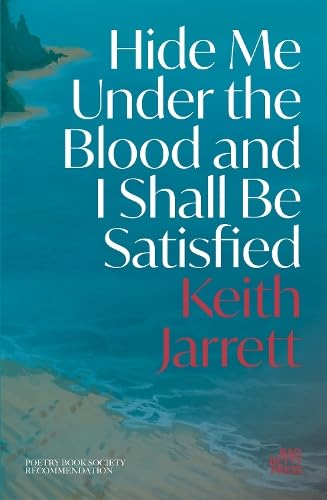
Here’s Keith Jarrett on what inspired him to write the poem ‘islands [a cobra in the cockpit]’ in Hide Me Under the Blood and I Shall Be Satisfied.
I was listening to the news in the bath while my dinner was warming up. I got to the ‘and finally’ segment: a pilot in South Africa managed to land a plane safely after discovering a cobra in the cockpit. The metaphors could write themselves!
‘He’d found a cobra in the cockpit’ was to be my opener when I started my free write, I decided, as soon as I was dry. Just as I reached for the phone, precariously balanced between the hot and cold taps, I noticed a spider, and I took a picture, an automatic reflex.
Heart Language
I was halfway through the Obsidian Foundation poetry retreat and had to submit a poem to the tutors before 8am. Early that evening, I’d had a robust conversation about the sonnet with members of my group. We’d argued about Eurocentricity, classism, and how the sonnet is venerated. (That said, some poets I hugely admire work within – and have expanded – the form. And I think it was Hannah Lowe who once described the sonnet to me as a ‘poetic essay’, a contained form for building an argument, and turning an idea around.)
We’d also talked about rigid meter that evening, and I had Kamau Brathwaite’s quote kicking about in my head: ‘The hurricane doesn’t roar in pentameter.’ I thought about how to conjure the sound of my own heart language – the Caribbean-inflected engine of my imagination.
I wanted a rigid structure, not quite iambic pentameter, halfway between the hurricane’s roar and the complex cadences of this island. What if I took away a syllable and had a jilted nona-syllabic line: di-DA-duh di-DA-duh-di DA-duh?
Islands of Thought
Free-writing, I had these ‘islands’ of thought:
- A mother and son, and the exaggeration of the speaker’s mother drinking tea straight from the kettle.
- The cobra (of course).
- The sonnet being a source of frustration, like family (‘my family’s a fucking sonnet’).
At the midpoint of heightened emotion, I started to retreat into language play, with the help of M. NourbeSe Philip’s ‘Discourse on the Logic of Language’:
… and english is
my mother tongue
is
my father tongue
is lan lan lang
language
l/anguish
anguish
a foreign anguish
is english-…
Floating
I wanted to glue the different islands together without them feeling like a ‘poetic essay.’ I wanted them to float without being unmoored. I think the strangeness of the line ‘my mother drinks tea from the kettle’ made me want to repeat it further down, and this is where I got my idea to link the stanzas like a crown of sonnets – where each sonnet begins with a line carried over from the previous one. That didn’t work here, so I inverted the process by ending each ‘island’ with a line from the beginning of the previous one.
Obsessions
I have my obsessions: biblical stories; Caribbean traditions; inherited family trauma; puns; islands. More recently – perhaps a byproduct of being in academia – I’ve also leaned into footnotes and marginalia. As I wrote, I wondered about adding some of this ‘meta-text’ to the poem, like the way I tend to interrupt myself when telling a story, or like adding a citation in an essay.
When thinking about all the things that have eaten at me (‘mosquitoes, amoeba and headlines’) I thought of a friend I knew from the Dominican Republic, and suddenly he was in the room shouting: ‘me están comiendo viiiiiivo!’ The sonnet conversation had started with with makalani bandele and Sim Perreira-Madder, so they entered the poem too as I wrote.
It took a few drafts before I worked out how many interruptions to include – I could have interrupted every single line with a different aside. Also, I had no idea how to represent these ‘meta-texts’ on the page. In early drafts, I had the main text left-aligned with an asterisk to signal where they would be on the right-hand side. It wasn’t until I started working with my editor, Amy Acre, that we experimented.
A Trusted Editor
Now I’ve mentioned Amy, in the first drafts, I’d attached a photo of my bathtub with the spider. ‘Literally look at the picture!’ was the original line, before she gently-but-firmly encouraged me to allow the words do all the talking. She was good spirited enough to entertain my replacement: ‘but Amy’s deleted the picture.’
Originally, the pilot ‘managed to land the plane stoic’, which could suggest that he’d been bitten. Likewise, ‘If I’d been allowed to the party’ was the opening line of a later stanza, which didn’t work. I swapped it out for ‘it’s hard to not hide from one’s haunting’, which then gave me the opportunity for the variant ‘it’s hard not to hide from the taunting.’
Working with a friend or an editor you trust means being able to cut what isn’t serving the poem and making sure you’re conveying what you mean it to.
About Keith
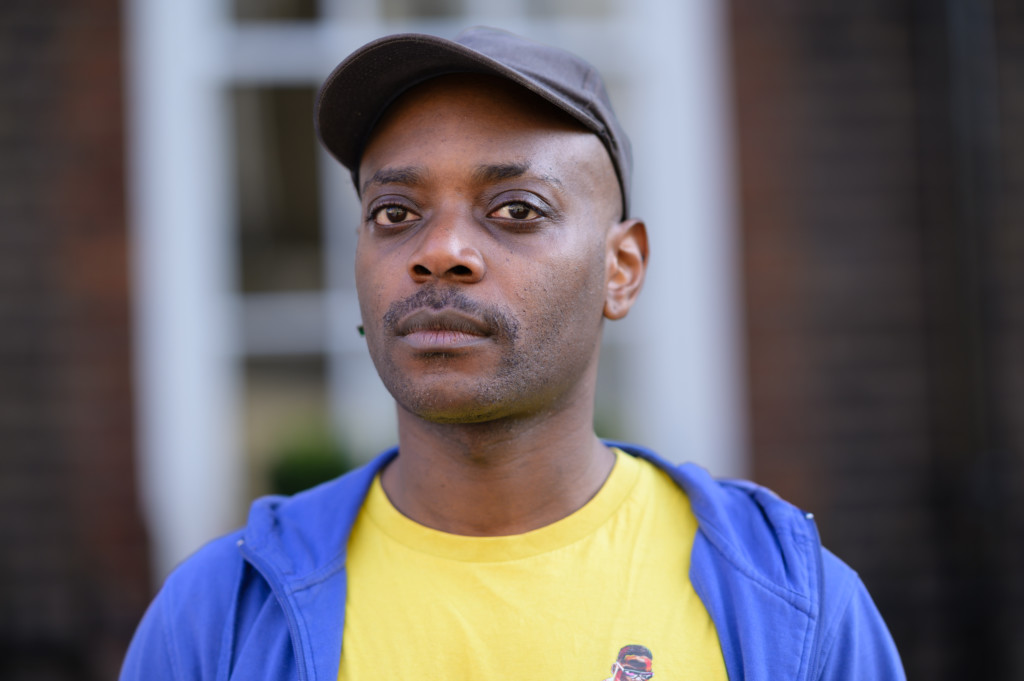
Keith Jarrett’s work explores Caribbean-British identity, religion and sexuality. A multiple poetry slam champion, he was selected for the International Literary Showcase as an outstanding LGBT writer. His poem, ‘From the Logbook’, was projected onto St. Paul’s Cathedral. His play, Safest Spot in Town, was performed at the Old Vic and aired on BBC Four.
Keith has judged the Commonwealth Short Story Prize, the Stephen Spender Translation Award and others. He appeared on the BAFTA-winning show Life & Rhymes with Benjamin Zephaniah. Keith holds a PhD from Birkbeck and teaches at New York University in London. Hide Me Under the Blood and I Shall Be Satisfied, a PBS spring recommendation, was published in March 2026; his novel is forthcoming.
Add your Reply
You must be logged in to post a comment.