 Carmen Bugan
As part of our Poetry Craft series, Carmen Bugan discusses the essential patterns used in poetry: triolet, rondeau, villanelle, sonnet, sestina, and ballad.
Let’s start with the triolet: what makes this form special, and do you have a favourite poem that shows it at its best?
Writing a triolet is an excellent way to begin thinking about repetition and its effects over the space of eight lines. The first line repeats as fourth and seventh lines and the second line repeats as the eighth. Only the first two end-words are used to complete the rhyme scheme: ABaAabAB (the capital letters indicate repeated lines). One of my favourites is the light-hearted Triolet on a Line Apocryphally Attributed to Martin Luther by Alicia Stallings. The poem insists on the question about the devil getting “all the good tunes” and, humorously, expresses a frustration with the irreverent getting the best out of life. This is a versatile form: it can be used to ponder more serious questions or situations too, and it can bring beautiful imagery to the reader’s mind.
The rondeau: can you explain its repeating lines and rhyme scheme, and share an example that you love?
We Wear the Mask by Laurence Dunbar is a great example of rondeau in its 15-lines form spread across three stanzas of 5, 4, and 6 lines (poems vary between 10 and 15 lines). The repeating lines, at the end of the second and third stanzas, use the beginning of the first line. In Dunbar’s poem, the repeating phrase is “We wear the mask,” which is the first half of the first line. The 15-line version rhymes like this: AABBA AABc AABBAc with c being the repeating line. I find the rondeau both elegant and capable of evoking emotion, particularly because of the repeating line, which, in Dunbar’s poem ends the stanzas with a lump in the throat.
The villanelle is famous for repetition. How does its pattern of repeating lines shape the poem, and which villanelle would you recommend reading?
The Waking by Theodore Roethke carries a direct emotional line to the reader, with its repeating lines “I wake to sleep, and take my waking slow” and “I learn by going where I have to go.” I remember first reading the poem many years ago and thinking, but this is all backwards, because I wake to stay awake. And then the thought of learning by going unlocked a joy in me about discovering my own life step by step, rather than looking at it from above, as if it were a map. It’s a glorious poem, make the repetition a prayer if you want: it works!
I love the villanelle for reminding me of the “village hora” of my childhood—that lovely traditional round dance. The form is this: five stanzas (three lines each) and a final quatrain. The first line (A1) and third line (A2) of the first stanza repeat by turns at the end of stanzas 2, 3, 4 and 5, and they repeat together in the final quatrain. There is a rhyme scheme too: A1 b A2 / a b A1 / a b A2 / a b A1 / a b A2 / a b A1 A2.
The sonnet is probably the most familiar form. How would you describe its structure, and which sonnet stands out to you as a great example?
There are several kinds of sonnets (i.e. Petrarchan, Spenserian, and Shakespearean among the notable) and the history of the sonnet from Italian to French to English is fascinating (more of that in our course). Like many people, I love all the Shakespeare sonnets, and during the covid lockdown my kids and I watched Sir Patrick Stewart read a bunch of them on YouTube. His beautiful recitations beginning with the simple “Hi!” got me and both children to the local park, where we marched and stomped to the iambic pentameter, to get rid of the lockdown sadness. The line ‘That looks on tempests and is never shaken;’ still reminds me of that difficult time and the cumulative effect of the sound pattern remains a sort of soundtrack.
The Shakesperean sonnet comprises three quatrains and a final couplet that signals a turn in thought or a “conclusion” or a “surprise.” The rhyme scheme on this one is abab cdcd efef gg.
The sestina can feel complex with its repeating end-words. How would you explain its pattern and which sestina do you find particularly striking?
The playful Sestina: Like by A.E. Stallings, focuses on the word “like” that appears at the end of most lines to call attention to its various uses. The poem is a commentary on how Facebook created new mannerisms for all of us. Repeating “like” subverts the requirement for six different words that form the intricate pattern of repetition. It’s a clever way to interpret the form.
A complex French verse form, sestina is made of six stanzas of six lines each and a three-line envoi. The end words of the first stanza are repeated in a different order as end words in each of the subsequent five stanzas; the closing envoi contains all six words, two per line, placed in the middle and at the end of the three lines. The pattern of word repetition is intricate but creates a powerful story-like effect.
Finally, the ballad — a form that tells a story. What are its key features, and do you have a favourite ballad that shows why it has endured for centuries?
Ballads are a bit like the social media of the past: they carried news, rumors, politics, and all sorts of other stories from place to place. The rhythm consists of alternating iambic tetrameters and trimeters in four-line stanzas: this structure is perfect to carry stories.
One of my favourite ballads is an anonymous one, called The Unquiet Grave. It has come to us from the 14th century to tell the story of grieving for the loss of one’s lover. The final stanza is as wise as the world, with its advice to the lover who has stayed by the graveside twelve months and a day: “So make yourself content, my love/ Till God calls you away.” I often think of Auden’s As I Walked Out One Evening as a wonderful ballad variation.
One last question: what advice you would give poets who are curious about these forms?
Poetic forms bring us together as readers and writers through their patterns of sound and shape on the page, and they are as powerful as all other rituals of life. Writing in poetic forms is a powerful way to integrate into creative communities and find one’s own place in language. Many of these traditional forms are as timeless as food recipes that are passed from one generation to the next. There will always be variations, interpretations, subtle changes in ingredients that will keep the recipes interesting: but the pleasure of working with tradition and innovation never ages. My Masterclass, Essential Patterns in Poetry, provides an opportunity for poetry enthusiasts around the world to share a passion for delightful language, and I look forward to guiding the conversation.
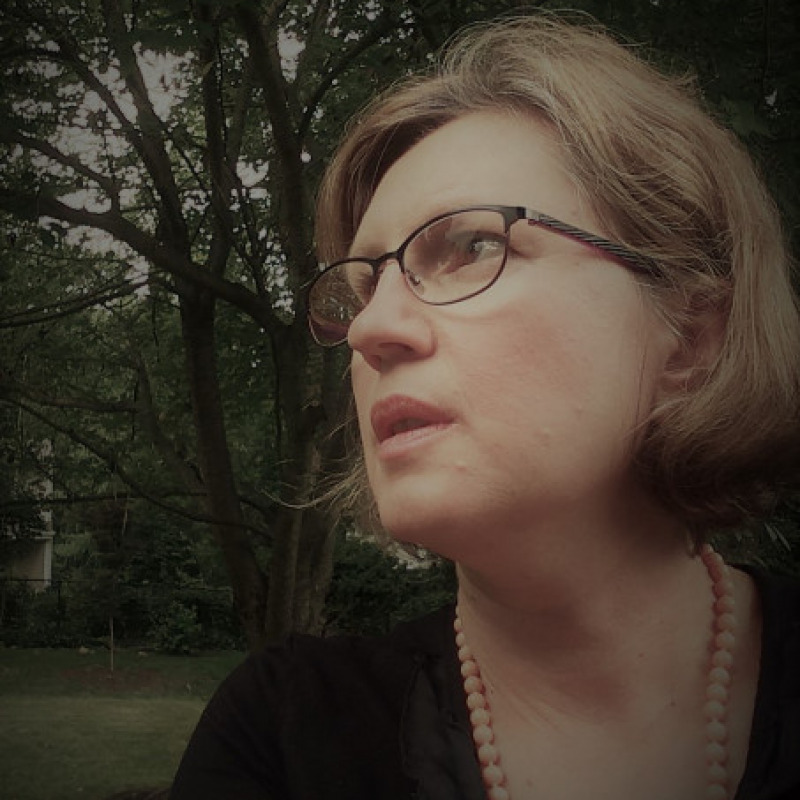
Carmen Bugan, George Orwell Prize Fellow, is an award-winning author of ten books that include memoir, essays, and criticism. Her work has been translated into several languages, gathered international praise, and has been widely anthologized. Carmen’s selected poems, Lilies from America, won a Poetry Book Society (UK) Special Commendation, and her book of essays on politics and poetics, Poetry and the Language of Oppression (Oxford Univ. Press) was named “an essential book for writers” by Poets and Writers magazine. Carmen’s memoir, Burying the Typewriter, won the Bread Loaf Nonfiction Prize, was shortlisted for the Dayton Literary Peace Prize and the Orwell Prize for Political Writing, was BBC Radio 4 Book of the Week, and has been featured on NPR, ABC, PRI and the BBC. The book will be released again as a “modern classic” with Picador/ Macmillan in June 2026. Carmen was educated at the University of Michigan (BA), Lancaster University, UK (MFA), and Oxford University, UK (PhD), and she has been teaching creative writing worldwide for over twenty years to people aged 12 to 92.
Carmen is running her course Essential Patterns in Poetry Masterclass with us this Spring, starting on 16 January 2026. To find out more and book your place please visit this page.
Add your Reply
You must be logged in to post a comment.