 Manisha Dhesi
In preparation for our launch of the Laurel Prize 2026, we are proud to present a beautiful blog and two stunning new poems from our Laurel Prize Poet in Residence, Manisha Dhesi.
Over the prize weekend, Manisha attended two workshops ran by Kathleen Jamie and Daljit Nagra, as well as the Laurel Prize-Giving Ceremony. Read on for her reflections and creations….

Read Manisha’s Poems below:
It started with rain.
The kind that floods concrete cities and wraps itself around every corner. Windows streamed, the trees beyond them blurred into watercolour outlines. It created its own kind of attention.
As the morning unfolded, people rushed for shelter across Millennium Square. I looked up at the Venetian Gothic clock tower, now City Hall, as my umbrella strained against the downpour. The square was almost empty, except for a bundle of pigeons gathered around a blocked drain. I imagined them washing, playing, unfazed by the deluge.
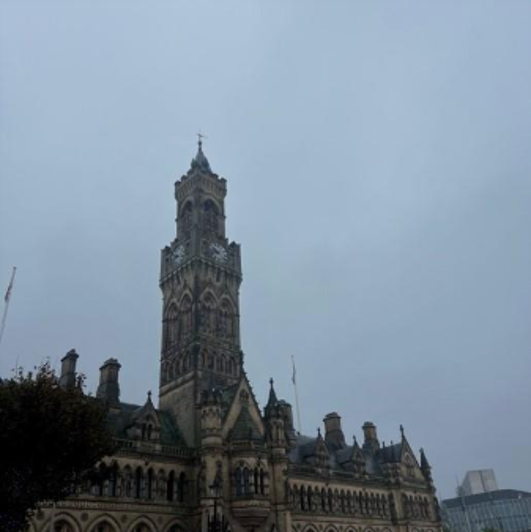
I greeted them good morning and headed towards the first workshop.
Rain still clinging to my sleeves. Inside, we settled into the library, weather already doing its usual work as social shorthand, something to open a room. The sound followed us in a steady percussion against glass becoming the soundscape of the workshops rather than their backdrop.
The first session, led by Kathleen Jamie, placed the emphasis firmly on subject. We were asked to attend closely to a single thing — the tide’s movement, the grain of soil, the bark of a tree. Structure, in this sense, was not something decided in advance, but something that emerged from staying with the subject long enough. Lines followed the object’s rhythms rather than my own expectations. It was an approach that made the body feel newly implicated in the act of noticing.
The rain continued.
After the session, I felt the pull to run into it, to treat it not as background, but as subject. I wanted to catch droplets in my hands and watch them vanish into skin, to stay with a single, fleeting thing long enough to notice it properly. A brief devotion.
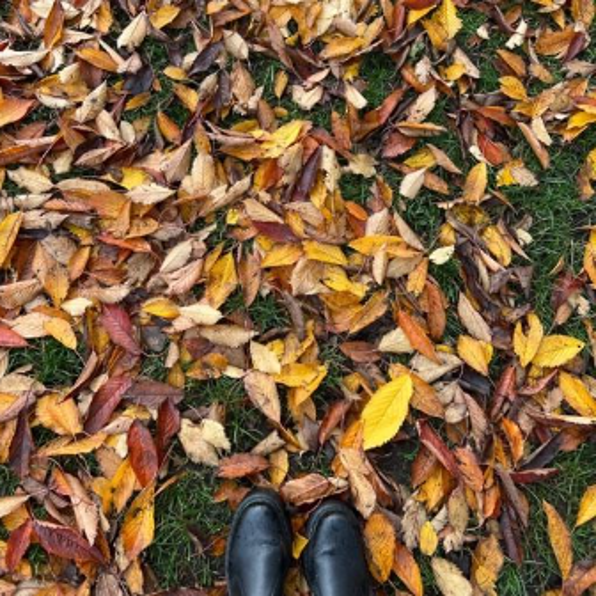
That attentiveness carried into the second workshop, led by Daljit Nagra, where we were encouraged to write directly into our own relationships with the natural world. As we shared ideas, intimacy revealed itself through form as much as subject. Some poems arrived in careful stanzas, paced and measured; others sprawled across the page, closer to concrete or field notes than lyric. One person wrote slowly, as if listening for underground water, another handled their notebook like spores, scattering fragments rather than settling them. No two approaches resembled each other, yet none of them felt at odds. The room felt less like a classroom and more like a gathering of ecosystems, each shaped by its own conditions, each finding its own form.
By late afternoon, the rain had turned into sea mist.
Performances carried the remainder of the day, and after the workshops, I found myself listening differently. Katrina Porteous’s Rhizodont brought poetry fully into the act of sound, her voice moving with the weight and rhythm of the shore. What struck me was how the reading echoed what had been explored earlier: attention to a single subject, patience with scale, a willingness to stay with slow processes rather than rush toward meaning.
Hearing the work in this context made the boundaries between science and poetry feel more porous. The performance asked not for interpretation, but for listening, for an attentiveness shaped by duration, repetition, and care. It was less about what was being described than how it was being held.
The following morning was unrecognisable.
Sunlight arrived sharp and unapologetic, pulling colour back into the world. Outside, the landscape seemed to respond in kind. Leaves, yesterday pressed flat to the ground, lifted themselves again. It was impossible not to feel the world exhaling.
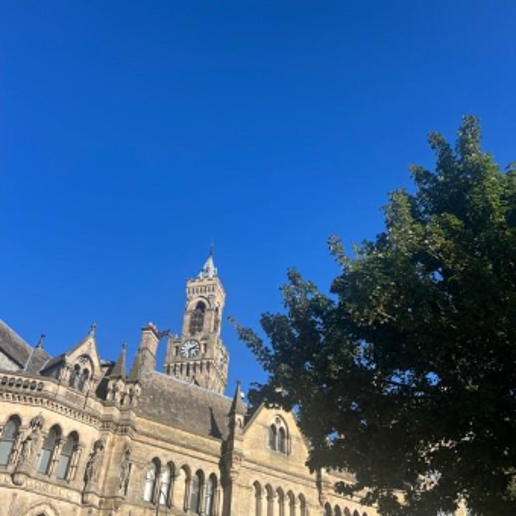
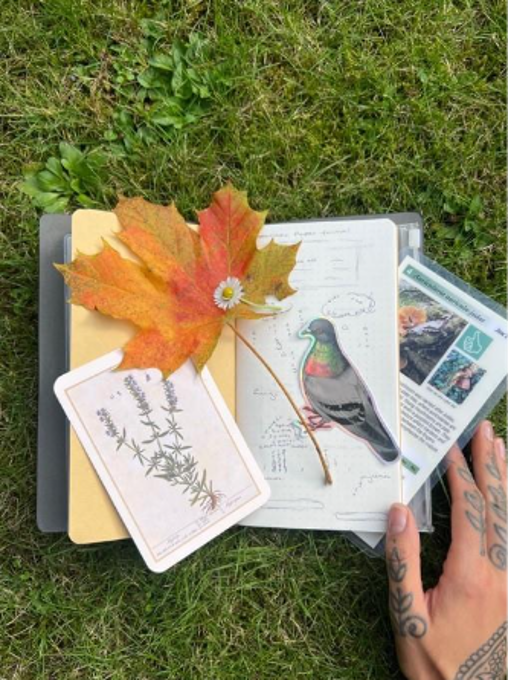
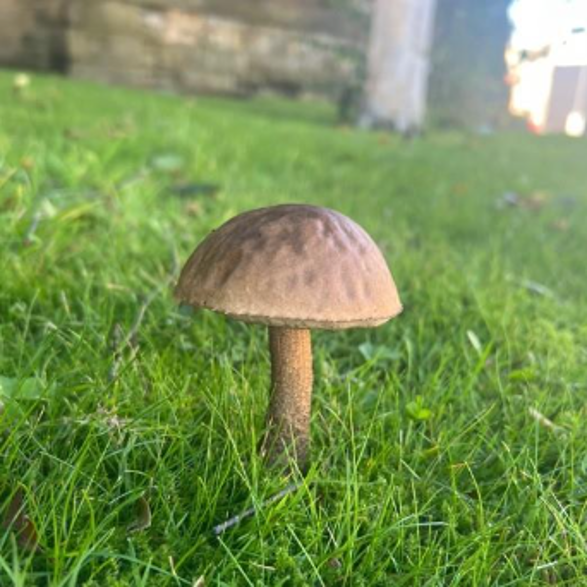
The air felt rinsed clean. On my walk to the day’s events, I noticed fungi peeping through the grass. Where the previous day they would have gone unseen, I found myself stopping, pulling out a forage pocket guide, identifying them as Agaricus Arvensis, more commonly known as the Horse Mushroom. The act felt continuous with the weekend’s instruction — to look at the earth more closely, to stay with what is in front of us long enough for it to become legible.
What stayed with me was not the contrast of weather alone, but the accumulation of voices across the weekend, the different ways people learned to stay with the natural world. The presence of poets speaking from marginalised positions made visible something essential: that the natural world is not owned, but shared, and that poetry returns us to the ground beneath our feet.
Add your Reply
You must be logged in to post a comment.