 Poetry School
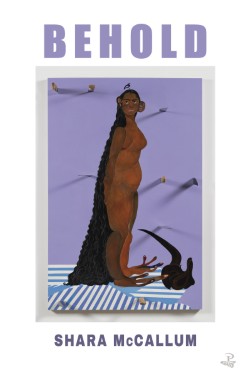
Welcome to our Writers’ Notes for the 2026 T.S. Eliot Prize shortlist. These are educational resources for poets looking to develop their practice and learn from some of contemporary poetry’s most exciting and accomplished voices. Here’s Shara McCallum on her collection Behold.
On Keeping a Notebook
When and where I write have been variable over the course of my writing life. I’ve had to be so partly because I’m a mother and teacher, caretaking roles I value that yet have challenged sustaining writing rituals, especially ones centred on time or space. The one constant over the past thirty or so years, instead, has been my habit of keeping a notebook. It served me exceptionally well again when writing Behold, which involved a great deal of me standing in front of artworks, looking for a long time and jotting down language that arrived in a manner that felt bidden by the art.
With poetry and even some personal essays, I almost always write by hand to start. Where poems are concerned, I typically stay in that mode longer for one main reason. My notebook offers a space of play in a way the typed page for me just doesn’t. Perhaps Word makes it too easy to quickly erase what I’ve written, overthink, second-guess, and focus on ‘correcting’ at virtually the moment I’m drafting. Oddly, in the reverse, it also encourages seeing a poem as finished too soon. Even the first inkling of a poem can look so lovely if all typed up and presented in black and white.
The typed page, in effect, doesn’t suit me as a poet invested in the desire to hear possibilities inherent to language. To find not what I meant to say, exactly, but what language might lead me to say. Editing and polishing aren’t verbs I use to describe this, feeling too much like tidying up. I think of my notebook as a stay against the pull (perhaps pressure) we all feel as writers, I suspect, to have something to show for our efforts. Filling up a notebook, I tell myself, is all I’m doing, which lowers the stakes and frees me to follow whims a more deliberate effort might tamp down.
I’m an advocate of keeping a notebook and writing by hand so much that, as a teacher working ever more with students who generally prefer composing poems on a laptop or as likely their phones, I’ve begun giving my students notebooks at the outset of our time together and asking them to really give writing this way a whirl. I tell them, and this remains true, that my notebook is one of the most enduring parts of my writing life, one that has kept me grounded in being a perpetual student of the art. I credit my notebooks with helping me stay inside of the process rather than standing outside of it or rushing ahead. To keep returning to writing poems as rehearsal rather than performance.
On Reading & Rereading
With Behold, I turned my whole attention to visual art for inspiration and lessons in how to write a poem. For instance, I thought about how I might use visual art modes such as the self-portrait, domestic interior, and nude as poetic ones, in the way as poets we remake elegies and odes inherited from other poets and the tradition. Looking to art like this was something of a departure yet linked to a habit that has been the scaffolding of my writing life, even more steadfast a companion than keeping a notebook: reading and rereading.
For stretches of time that can last for as long as a year (I’m in one of these presently), I don’t write poems at all. But I am always reading and thinking about poetry. There are too many poets I love to reasonably name, and I find it difficult to answer the oft-posed question of which poems or books inspire and instruct me most. Not because I don’t know I’m indebted to other poets. Quite the opposite. The truth is I’m indebted to all of them. Even the poems I’ve hated rather than loved have taught me something, which is to interrogate why my mind is attracted to or quickly recoils from a certain tone, voice, or various and sundry other shaping proclivities and manners of a poem.
I know about myself by now, for instance, that I love formal measures but as these relate to advancing, let’s call it, the argument of the poem, such that form and feeling become inseparable. When form is surfaced too often it can quickly feel too clever and pleased with itself for my taste. I love fragmentation, as a more specific example, though not solely as technique. Rather, I love it best when it is used, as Eliot says, as something to shore against our ruins. All of this I’ve learned not only by reading poets whose work I want to stay inside of as if it were my second skin but also by reading poets whose registers of speech my mind actively resists.
What’s also important to say at this juncture is that I’ve been reading poetry intently for so long that I’m struck often now by how a younger Shara reacted to poets to whom the older version has returned only to experience a shift in perception, sometimes a marked one. By rereading, I may come, if not to love, to admire the work of a poet I earlier dismissed. Sadly, the opposite has been true, and some of the poets I once held close have lessened in potency. Because I can be quite dramatic about my poetry loves, this has at times been heartbreaking.
As it should be. We all have poets we hold nearest and dearest. But if we’re being honest, these can’t always remain the same over time, and they can’t always be the ones whose names everyone else may be singing at a given moment. Reading and rereading have taught me to trust and question my mind in equal measures. To fiercely cultivate my attachments to the poets I regard as touchstones as well as open myself to gleaning something from those with whom my spirit doesn’t find easy company.
About Shara
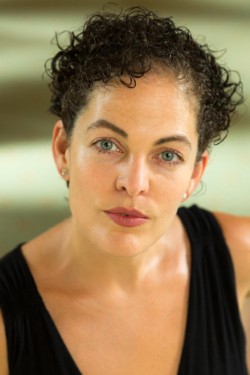
Shara McCallum is the author of seven books published in the US & UK, including Behold, shortlisted for the T.S. Eliot Prize. She is the recipient of a Guggenheim Fellowship, NEA Poetry Fellowship, Musgrave Medal, Hurston/Wright Legacy Award for No Ruined Stone, OCM Bocas Caribbean Poetry Prize for Madwoman, Agnes Lynch Starrett Prize for her first book The Water Between Us, among other awards. From Jamaica and of Jamaican and Venezuelan parentage, McCallum is a Sparks Professor of English and Director of the Creative Writing Program at Penn State University and a 2026-27 Cheney Fellow at the University of Leeds.
Add your Reply
You must be logged in to post a comment.