 Tishani Doshi
Welcome to our Forward Prizes 2026 ‘How I Did It’ series. This year we asked poets shortlisted for the Jerwood Prize for Best Collection to write about the inspiration behind one of the poems from their book.
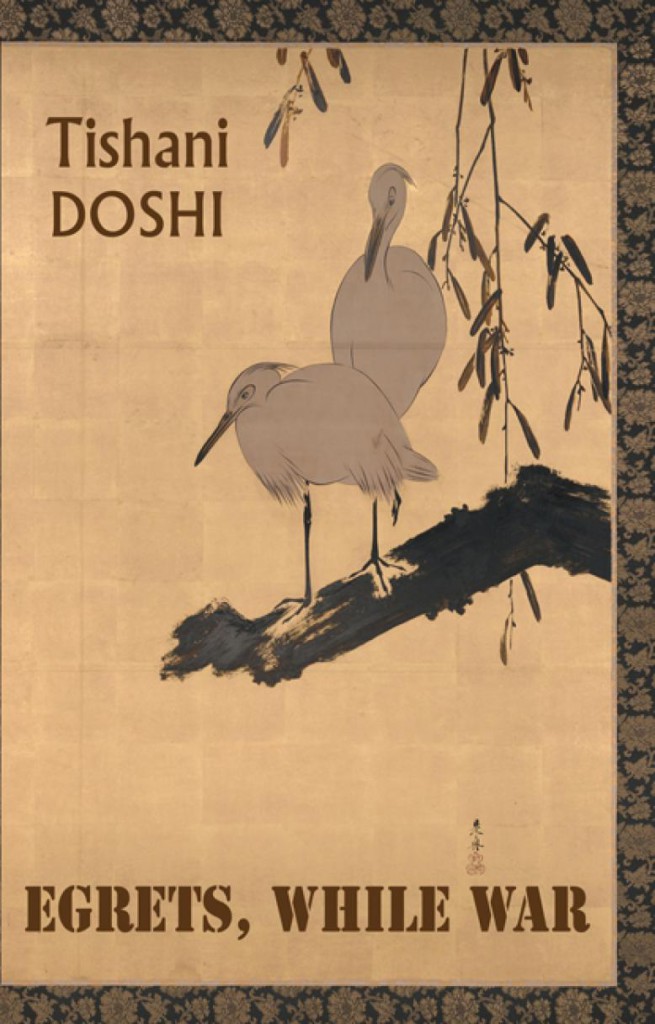
Here’s Tishani Doshi on what inspired her to write the title poem from Egrets, While War.
Beginnings
It feels heretical to try and pin your own poem to the ground in an attempt to extract the mystery of its beginnings from it. But let me try. For a long time, I believed that ‘Egrets, While War’ began while watching the cattle egrets in my garden in Tamil Nadu one March morning, noticing how their stalking dance was so reptilian and prehistoric. Some theropod ghost ancestor still visible in the neck, the gait. But when I went back to my drafts of the poem, I saw that the egrets had only entered in the third draft, towards the very end, where I had begun talking about a hole in the roof of the sky through which the past could fall through.
The Missing Link
At the time, I’d been reading about LUCA, the Last Universal Common Ancestor, the single-celled organism from which all life on Earth is thought to have arisen over four billion years ago. I had also made note of this old tweet by the actor Tim Allen: ‘If we evolved from apes, why are there still apes.’ (There was no question mark in the original tweet, it was presented as statement). I was interested in the fallacy of this whole ‘missing link’ theory, the notion that evolution works in some kind of straight line. In my childhood home we had the whole set of Time-Life books, and Rudolph Zallinger’s ‘The March of Progress’ illustration, which presents millions of years of human evolution from Pliopithecus to Modern Man, was on a poster I passed every day from my bedroom to the breakfast table.
Ideas of Time
One of the most fundamental relationships a poet is engaged with, is surely with the idea of time. Marina Tsvetaeva, in her essay ‘The Poet and Time’ wrote, ‘To be a contemporary is to create one’s time, not to reflect it. Or, to reflect it, only not like a mirror but like a shield.’ Charles Simic, in his essay, ‘The Flute Player in the Pit’ wrote, ‘The secret wish of poetry is to stop time.’ When I look at the date attached to the first draft of this poem, I can see I began writing on March 5, 2022, shortly after Russia began its invasion of Ukraine. I was thinking about cities under siege – Kyiv, Kharkiv… and when I read the poem now, I can feel that same vertigo I was feeling, of trying to hold evolutionary time and breaking news together.
The Key
The key to unlocking the poem though, were the egrets. Once they entered, they became a hinge, flying through a hole in the sky, a link to the deep past, the ongoing present, and a glimpse of the future. A convergence point that allowed me to move in several directions. I live by the sea, and gaping at the Bay of Bengal every day, I understand the sea as this great churner, cauldron of our beginnings. So, I could imagine my own march of progress, a funny parade of creatures clambering from sea to land, ‘shedding fin, / tail, gill, to transform into a symphony / of great-aunts and uncles.’ I could move down into the ground with ‘clay fingerprint, / fragment of jaw,’ and ‘bony-plated language.’ And I could think of the future. When I write, ‘Our task is to march on’ – it is the poem’s response to the missing link fallacy, the false idea of linearity and straightness, knowing our plans rarely go in the direction we hope.
& Possibility
Once I began the poem with egrets, the poem moved by its own logic – synaptic leaps, declarations, desires. ‘If we could just wake to fullness in a delta with the berry-red lips / of an amorous god upon us.’ Despite the inevitability of lament, I always want a corner of the poem to be involved in praise, in possibility. Following the synaptical leaps is possibly the most enjoyable aspect of making a poem for me. The poem becomes its own time-zone of collecting all the disparate ideas and images in your head and coalescing it into a compressed form.
Against Disappearance
The final image of the sea retracting her tongue like a warning came from this gesture in India, where sometimes people stick their tongue out at you instead of cursing you aloud. The idea being that the syllables are caught there at the tip of the tongue, and so the words aren’t required, the gesture suffices. It’s also an act of catching yourself before you go too far. The idea that if a curse is uttered, it cannot be brought back in. The same way that if a species is made extinct, it cannot be brought back to life. So, the sea offers us a kind of warning. About the future? Against disappearance? The poem loops back on itself, back to the beginning, with cities in wartime and the threat of vanishing. But now the egrets are not named. They could be any winged beings, mythic beings – hopes, fears, the poem itself.
About Tishani
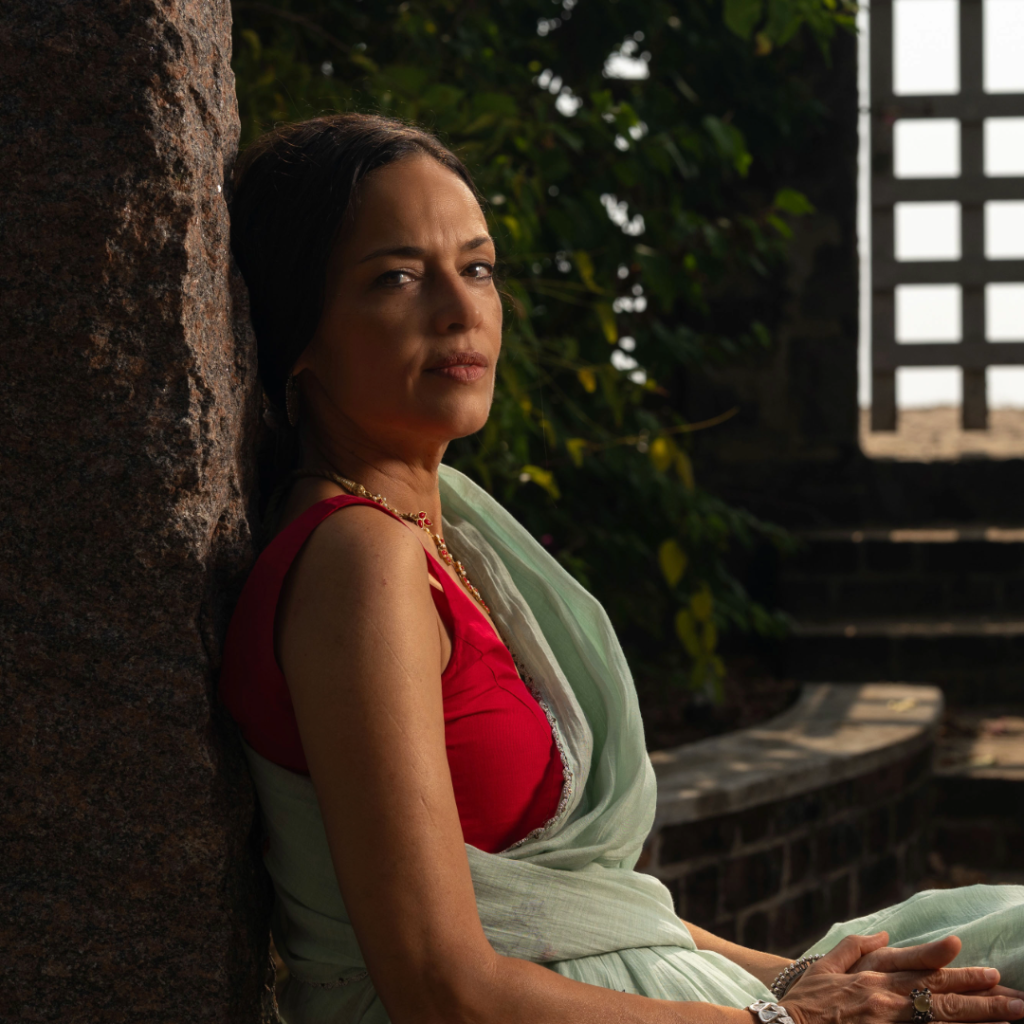
Tishani Doshi publishes poetry, fiction, and essays. Her fifth collection of poetry, Egrets, While War, explores the body, violence, and renewal in fractured times, and has been shortlisted for the Forward Prize for Best Collection 2026. A former dancer with the Chandralekha company in Madras, India, she is the author of multiple award-winning and shortlisted books, is a Visiting Professor at NYU Abu Dhabi, and a fellow of the Royal Society of Literature.
Website: https://tishanidoshi.weebly.com/
Instagram: @tishanidoshi
Add your Reply
You must be logged in to post a comment.