 Caroline Smith
Welcome to our Forward Prizes 2026 ‘How I Did It’ series. This year we asked poets shortlisted for the Jerwood Prize for Best Collection to write about the inspiration behind one of the poems from their book.
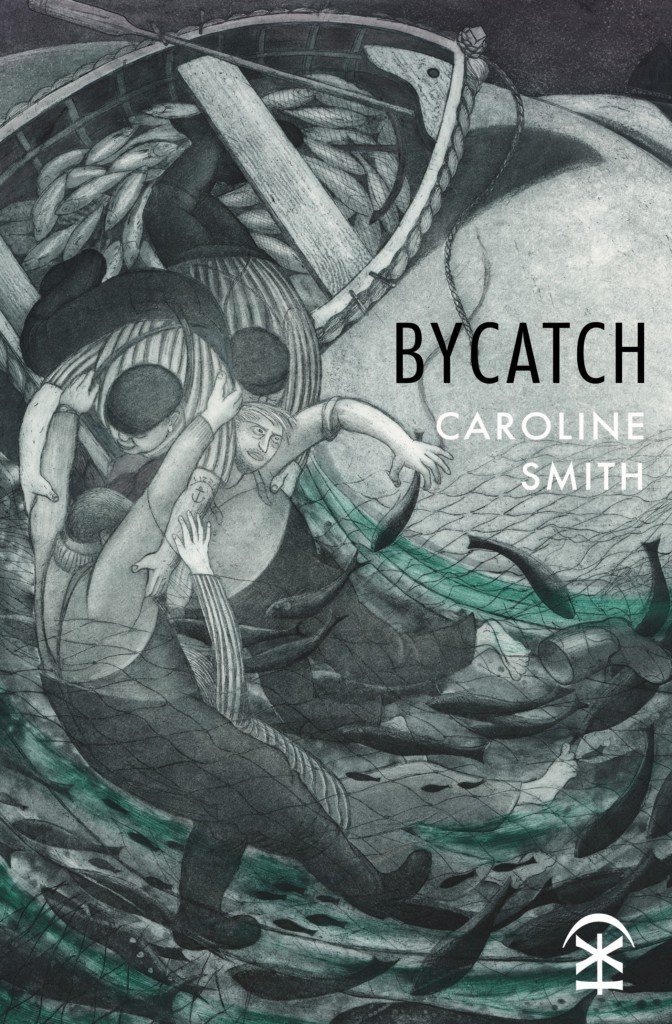
Here’s Caroline Smith on what inspired her to write the poem ‘Removal’ in Bycatch.
Grab the reader’s attention
The opening of the poem, with the line ‘It’s the season of mattresses’, is an echo of Keats’ ‘Ode to Autumn’. A sardonic celebration of the joys of autumn in an urban landscape of fly tipping, as landlords evict tenants, and mattresses appear like toadstools overnight in the streets. Ascribing pastoral imagery to the urban landscape shifts the focus from urban to a rural theme. It is a movement from the pavements and HMOs of Wembley where I live, to the overgrown garden and unmanageable home of my parents in the countryside.
Establish the idea
This sense of transition was particularly important to me as the writer. I too was shifting my focus from my previous book (The Immigration Handbook) to my new collection (Bycatch). My working title for the poem was ‘Transition’: not only because it is set in an autumnal, transitional time of year or the personal transition for me, but the transience and insecurity of the tenant facing a ‘no fault’ eviction, the pregnancy of my friend, and the transition my parents were preparing to make, to move to a retirement village.
The Trigger
The trigger for ‘Removal’, (and for the collection as a whole), was my realisation that my parents were becoming increasingly frail and that I was losing them. The challenge was to find the form that would contain this experience that was more than just my personal story. As my father began to develop dementia, this became the linking thread through the collection.
Make it part of something bigger
Bycatch tells the story of my parents’ ageing and decline. Each poem reveals a different and essential part of that narrative. But the collection is not simply about them: it is about the shifting burden of care, the experience of living with dementia, and the impact it has on everyone connected to it. In this way each poem is a facet of the bigger narrative, and the narrative itself is part of a much wider human experience.
Rework the idea
An early version of ‘Removal’ began … ‘I’m helping my pregnant friend to flat hunt …’ – too wordy and dull. The second part of the poem however, from ‘The tenant follows us from room to room …’ is almost unchanged. As I reworked the material, I realised that this was the core of the poem – the pivot between the tenant and my father. The opening was scene-setting and establishing facts. Once I knew that this was the nexus of the poem, I could tighten the opening to be bolder and more direct in its movement towards the end. Crucially I also changed the title to ‘Removal’. ‘Removal’ reflects the forced nature of the moves. Both the tenant and my father are being ‘evicted’ from their homes – in the tenant’s case literally. But in my father’s mind, his removal was no less forced. Ultimately, he had to face his own infirmity and acknowledge that he could no longer manage in the home he had loved for 35 years. The change of title embodies the powerlessness of both characters and is the core of the poem.
Make it real, facts not emotions
I try to write in an understated way, to show brutality or pain quietly, showing what is lost and not my feelings about it. It’s important for me to stand back from emotional involvement, and to make space between poet and subject; to allow the reader to establish their own relationship with the poem and identify how it resonates with their own experience.
That is also why I have grounded the poem in specific details: ‘The tenant has been issued with a Section 21’ – fact. No wicked landlord, no sullen, unhelpful tenant – just facts that present complex situations and characters without judgement.
But there are two levels of narrator in ‘Removal’. There is the narrator who is internal to the scene and who is attempting this neutrality. Then there is the poet who recognises the narrator’s complicity in both scenarios – both evictions. The poet who asks the reader to expiate their guilt – because their pregnant friend needed a place to live – ‘her first home’ – because their father had ‘agreed I could’.

About Caroline
Caroline Smith studied Fine Arts (Sculpture) at Goldsmiths College. She now lives in Wembley where she works as the immigration and asylum caseworker for a London MP. Her poetry book, The Immigration Handbook (Seren) was shortlisted for the Ted Hughes Award and translated into Italian by Prof Paola Splendore and published by edizioni dell’asino.
Smith has been widely published in journals and anthologies, including The Poetry Review, The Spectator and Staying Alive (Bloodaxe). Her work has been shortlisted or won prizes in poetry competitions, including the Alpine International, The Keats/Shelley, Indigo Dreams and The National Poetry Competition. She organises the 160+One Poetry Festival in Wembley and has given readings at Festivals and Universities around the world. Her work has been set to music by the British Argentinian composer, Silvina Milstein and performed on Radio 3 by The BBC Singers.
Her new collection, ‘Bycatch’ was published by Nine Arches Press in 2025 and shortlisted for the Forward Prize (Best Collection). She is a 2025 Hawthornden Fellow.
Instagram: carolinesmith845
Website: www.carolinesmithpoet.com
Add your Reply
You must be logged in to post a comment.