 Sarah Howe
Welcome to our Forward Prizes 2026 ‘How I Did It’ series. This year we asked poets shortlisted for the Jerwood Prize for Best Collection to write about the inspiration behind one of the poems from their book.
Here’s Sarah Howe on what inspired her to write the poem ‘A History of my Relationship with my Mother in Twenty-three Arguments about the Laundry’ in Foretokens.
I myself am a trace of empire, a residue left behind after the waters receded – to use Ann Laura Stoler’s term, imperial debris
I was born in Hong Kong in 1983 when it was still a British colony, and one of the last outposts of that dying Empire
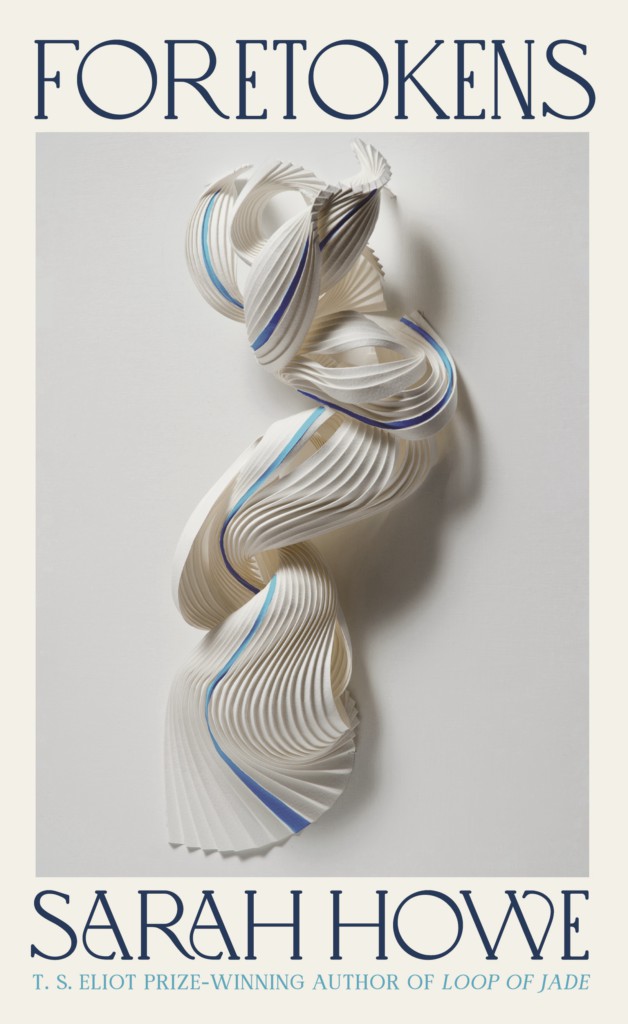
The warship that gave the gun salute to accompany the raising of the Union Jack when the British took possession of Hong Kong island in 1841– it makes a cameo in my collection, Foretokens – was named Calliope, after the Muse of epic poetry
HMS Calliope’s canons echoed round the bay of Hong Kong’s not-yet harbour that morning, and still echo now
My most recent poems have tried to tackle a subject I find inherently painful: the way my parents’ marriage – he white English, she Hong Kong Chinese – was a colonial situation. A microcosm, quite directly, of ongoing imperial power relations
When I wrote it, I thought this poem, ‘A History of My Relationship with My Mother in Twenty-three Arguments about the Laundry’, was essentially a domestic scenario: a daughter has moved back in with her parents, bringing a husband and newborn in tow, and finds herself having to reconfront various things about her own childhood, including her mother’s traumatised and neurotic relationship with household labour – especially the laundry
I had a strange experience while writing it, almost in a single burst like an overflowing, and immediately after: I had no sense that the poem might be funny or humorous in any way. That didn’t dawn until a few weeks later, when I took a printout of the poem to one of the rare readings I had during that dry phase of my writing life, wanting desperately to read something – anything – new. This poem was still so fresh and tentative I found myself scribbling the page with rewordings and crossings out even on the tube ride there
When I got on stage and began, haltingly at first, to read it out, I was astonished when people in the audience started to laugh – gradually at first, and then quite a lot – until, discomforted, they stopped
Later in the poem, the father, overseer-like, looks up from his newspaper to pronounce, with a kind of jovial disgust, This house looks like a Chinese laundry
In early 20th century Britain, as in America, such laundries were the most visible sign of Chinese presence in the society, and such businesses always were the first to be targeted in anti-Chinese race riots. They held sway until the advent of domestic washing machines in the 1960s, at which point many transformed into Cantonese restaurants and takeaways
Apart from those pencil jottings on the tube, the poem changed hardly at all from its earliest drafts to its final appearance in book form. It didn’t feel right to over-tidy its initial outpouring. The only significant difference was a passage I cut from towards the end of the poem, after that first outing at the event in London:
I imagine what it must be like for the only thing you really have in your control, the only thing that is under your thumb, because you are under everyone else’s thumb, the only ladder up because you yourself are the lowest rung, to be the laundry
A nice man had come up to me after the reading to say how much the poem had moved him, how these lines above all had made him cry
For a poem about the soul’s opacity towards itself, I have found myself wrongfooted about it more than once
It wasn’t until I came to re-read Joyelle McSweeney’s work on the Necropastoral, ahead of an academic panel in Germany, that I suddenly began to think about this poem in light of her ideas
For McSweeney, the Necropastoral is a political-aesthetic zone in which the fact of mankind’s depredations cannot be separated from an experience of ‘nature’ which is poisoned, mutated, aberrant, spectacular, full of ill effects and affects
Once that switch flipped, connection made, it was as if I could suddenly see the occult message encoded into this poem’s metaphorical logic – revealing, beneath the domestic surfaces of the house in Hertfordshire on the outskirts of London where I spent my latter childhood, a landscape of climate anxiety, ecological catastrophe, and imperial ruination
All the worries and terrors suddenly swam up: killing the planet with laundry, disaster, flood, famine or destruction, drought-struck fields. Climate nightmare as verso to the domestic drama’s recto
As the daughter tries to clear the laundry’s endless backlog she finds herself digging down into her own and her family’s past. It’s an impossible task, her own leaking breasts soiling her shirt as she works, adding more to the laundry’s never-ending pile faster than she can move
On a Necropastoral riff, I found myself asking, what is being laundered in this poem?
The power relations between the Chinese wife and the family she labours for, obfuscated as maternal care?
The mixed-race children whose apparent whiteness of almost passing is betrayed to their schoolfellows, elsewhere in the book, by an invisible yellow stain?
The school cricket cap that stands for a colonial education system? British sport, like its poetry, as envoy of soft power: the spattered mould, lingering, sporing
The obfuscation of empire omnipresent in British society and school curricula, as a national shame that can’t be acknowledged or spoken? Like the holes, the negatives in the sedimented ash, that defined the victims at Pompeii
I realised how, in this poem, history becomes an unending cycle of repetition, like a load of washing, or a looping refrain. I had been thinking of the repeating end word, laundry, as kin to forms like the sestina or ghazal that often house some kind of inescapable obsession
As the labour of care is unending, so are the detergents and microplastics leached from our washing eternally to contaminate the water cycle. Or indeed the breast milk passed – like other traces or residues – from mother to child
About Sarah
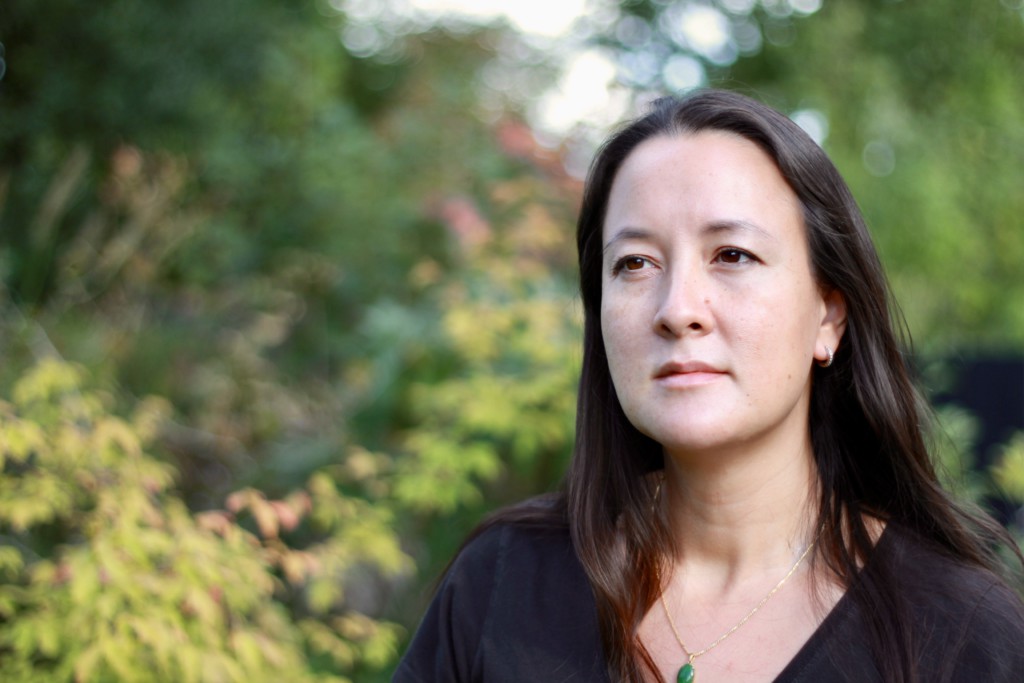
Sarah Howe is a Hong Kong-born poet, poet and editor. Her first book, Loop of Jade (Chatto & Windus, 2015), won the T.S. Eliot Prize and The Sunday Times Young Writer of the Year Award. Her second collection, Foretokens (Chatto & Windus, 2025) is a PBS Choice and shortlisted for the T.S. Eliot Prize. Previous honours include a Hawthornden Fellowship and the Harper-Wood Studentship for English Poetry, as well as fellowships from Harvard University’s Radcliffe Institute and the Civitella Ranieri Foundation. She is an Honorary Visiting Professor at the University of Liverpool and the Poetry Editor at Chatto & Windus.
Add your Reply
You must be logged in to post a comment.