 Matthew Caley
In this series, we interview our tutors about poetry and its place in their world. These interviews will cover creative writing tips, excelling in a poetry workshop, building a literary career, and finding your poetic voice. Here’s the third and final part of Matthew Caley discussing feedback, originality & ownership in workshops.
Does Taking Feedback Mean It’s Not My Poem?
In your view, does collaboration or taking feedback diminish the ownership of a poem? Or can it enhance the others’ perspectives?
Of course, collaboration, dynamic discussion, critical argument, feedback all help massively –particularly at certain junctures in a poet’s development. [The dangers of a ‘single-poem’ critique workshop possibly, at times, hampering the ‘originality’ I’ve already discussed above.]
The tutor-poet can only do so much. The thing they can’t do, and in my view ‘shouldn’t do’, [as with any teaching] is to become the student’s energy, make them ‘a mini-me’ or graft ‘a vision’ onto them. You might see things within them and their own work which you intuit may lead to then developing these things, but you can’t go further.
On Vision
Vision, [and an aesthetic trajectory] I think, are much more important than is often given credit for. It’s relatively easy to explain, with examples from existing, usually past poets, what these might be. Much harder to inculcate how to develop one in a student through the sorts of workshops we do. These days ‘vision’ can mean a set of theoretical/social principles that the student has explored say on an MA or PHD. But that’s not quite the same thing as ‘vision’. Vision takes us into the realm of the extra-sensory. Poets do often deal [internally] within these territories but they are harder to articulate or pin down [without sounding silly.] However, Robert Graves was ‘silly’, Yeats was ‘silly’ [Auden said so], Marianne Moore was ‘eccentrically silly’, Olson, ‘near-deranged and silly’. They are all dynamic and amazing poets, and a certain vison was part of that.
Sometimes, the ‘best’ students are the ones who come into the group with a directional sense of impetus. Who, whilst respecting the group dynamic, are ‘going through the group’ to get somewhere. I mean here an aesthetic goal. Though getting somewhere in the ‘official’ poetry world – publication etc. – might be part of it too. They have a drive, the drive necessary to absorb, adopt, adapt, reject what they learn, and put it to the right use within their own developing aesthetic. They’re actively looking for the right stuff to ignite themselves and take it when they find it.
Having said, that, many other students are taking a course for slightly more gentle reasons, social ones, general interest, a break from other things, or might not be as driven for a variety of personal/life reasons. Their pace and attitude might be very different.
This doesn’t mean you should be less critical of their work. It’s worth finding the motivation out fairly quickly for each student, because they might have massive potential they’re not recognising. They might have internal hurdles to get over. They might want to get somewhere but don’t quite have the drive to achieve it. All you can do is to show them, honestly, where the work is, and what it could, potentially, achieve. You can work on their confidence [through the work/critique you give them] but you can’t solve the problems holding them back. Again, keep the focus on the work, if they recognise improvement/achievement there it may help with other aspects of their lives.
On Ownership
As for ‘ownership’, in reality, this is a hugely complex field. To even begin to unpack it you’d have to look at the whole spectrum of influence [the science of], how we learn, emulation, homage, overlay, erasure, Schools, plagiarism, ‘originality’; reference, hyper-association, semiotics, the myth-kitty, the complexities and contradictions of copyright law, the collective unconscious, simulacra, AI, and many other aspects.
The history of poetry is largely built on poets taking other poets or poems as models for their own practice. Sometimes very deliberately. Blake re-writing Milton for example; Amy Clampitt wouldn’t have existed without Marianne Moore. Maybe shouldn’t have. The notion of total ‘originality’ is popular in the 20th Century, but not necessarily before. Then you had the ‘apprentice-to-the-master’ system, formally or psychologically which is seen as impossible in late post-post-Modernist times. You might achieve a degree of originality, but it will only be a degree. We don’t own language. According to post-Modernism, language shapes us. Precedes us.
Better to find out how your work would be placed, amongst which of the groupings, over-lapping as they are, of the Schools. The multiple, divergent strands and strains of our current Pluralist Now, to see where your allies and [friendly] rivals might be. Tutors can help you with this ‘positioning’.
There IS some copyright law. Your work, published in book-form, will be copyrighted to you as ‘the sole author’. I don’t advocate a total ‘free-for-all’. But the poet works within a tradition made up of multiple traditions. An inherited lexicon/language; an aspect of ‘folk tradition’ – pre-copyright materials, often work in existing traditional and/or progressive pre-existing forms. They work within a particular culture and community, and disperse their work in a variety of pre-set forms. The book [someone else often sets the typography, lays out the pages, buys the paper, designs the whole thing, does the cover], the website, the pamphlet, the broadcast, the reading, the blog, the phone, social media….
Poetry IS a hugely individual art. Your individuality is crucial to making your art strong; but it’s connected to a wider community. It sits inside our economy and has a wider creative-capital. You have a dynamic relationship, hopefully, with other poets, readers, critics, publishers, organisers, and tutors. And these relationships are very important. Individuality and collectivity, are both important requirements. Poems are forms of criticism aimed at other poems – merely by their existence – there’s an intra-textual buzz between differing poems. Criticism, if good, is a kind of poem too, in that it also offers an alternative view to the work. We’re all involved in this matrix, on differing sides at the same time. That’s how we improve.
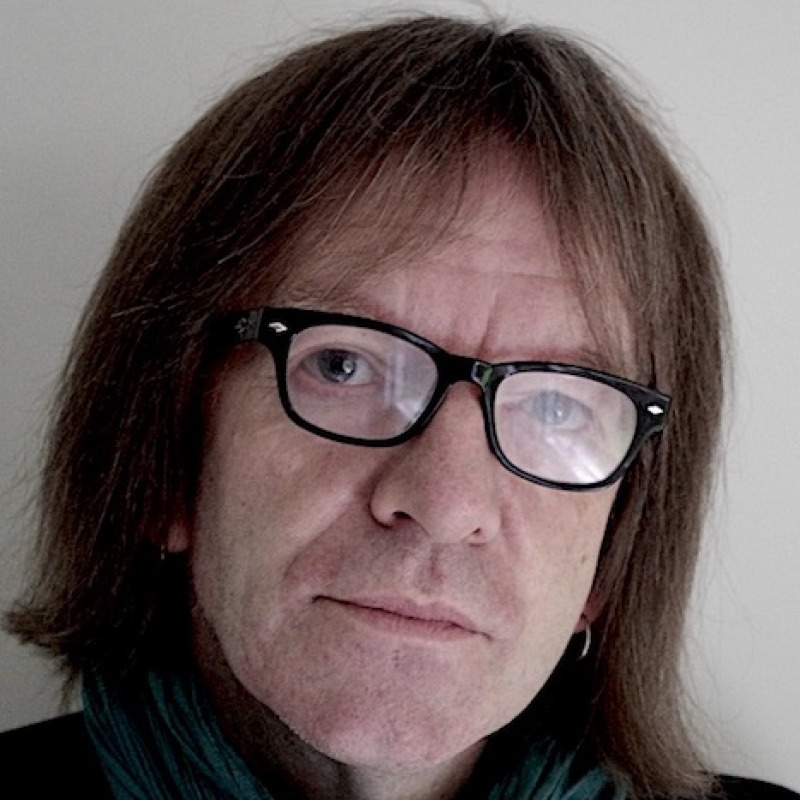
Matthew Caley’s 7th collection, To Abandon Wizardry, is published by Bloodaxe in November 2023. Since his debut, Thirst [Slow Dancer, 1999] was nominated for The Forward Prize for Best First Collection, his work has been widely anthologised and appeared in many magazines, websites and journals. He has given many readings both here and abroad.
Matthew will be running his zoom course Technique 3.0 [How to Discover or Disown It] with us this Summer, starting on Thursday 14 May 2026. To find out more and secure your place please visit this page.
Add your Reply
You must be logged in to post a comment.