 JLM Morton
As part of our Poetry Craft series, JLM Morton asks how can poets write about England in strange times.
England has a long literary and folkloric history, but how can poets write about the country today – especially in the context of rising nationalism and exclusion?
Poets today can write about England by reimagining national identity as plural, contested, and hybrid, foregrounding voices that celebrate inclusion, migration, and ecological belonging rather than sentimentalizing an Albion of aspic or the past with nostalgia, replayed through the lens of exclusion.
Many poets working now confront the idea of a singular, ‘pure’ Englishness by highlighting histories of colonialism, migration, and racialized / gendered exclusion. Works by Patience Agbabi, Daljit Nagra, and Lemn Sissay, for example use humour, hybridity, and vernacular to destabilize narrow definitions of belonging.
England’s urban and rural landscapes can be reclaimed as spaces of multiplicity and poets can explore how places are layered with stories that talk back to rising nationalism and exclusion, demonstrating that we were always a plural, hybrid, mongrel race. England is both local and global, fractured and connected. Poets like Imtiaz Dharker, Zaffar Kunial and many others unravel the idea of a single national voice, instead performing in-placeness through diverse cultural and linguistic registers.
At the risk of taking an instrumentalist view on poetry, in our current context of rising nationalism, writing can become a kind of counter-narrative tool. Poetry can resist the narrowing of identity by offering alternative visions of belonging rooted in hybridity and social justice, re-enchanting landscapes and folklore with inclusive, ecological symbolism, creating space for communal imagination. Here England is not a fortress but a meeting ground of histories and futures.
Your course explores “Re-Weirding Albion.” What does it mean to reclaim strangeness, myth, or the uncanny in the English landscape?
Leaning into the weird (and into the Old English ‘wyrd’) is a way of exploring the world beyond normative narratives of Albion, reaching into the uncanny, the queer, the mythic, the numinous and folkloric layers of Britain that have been flattened by the freight of an imperialist and nationalist past which can feel exclusionary and erases the darker histories of exploitation, class struggle, and colonial violence tied to the landscape.
‘Re-Weirding Albion’ is not a movement as such. It’s a term I made up to gesture towards an emerging culture. One that has been primarily led by visual and performance artists in the British Isles. This loosely associated group of neofolk / outsider artists draws on a wide range of influences. Amongst them archaeology and pop culture, folklore and ritual, psychogeography, horror, the uncanny, ghost stories. It is deeply engaged in explorations of landscape and place, peeling back the palimpsests of stories held in the soil.
Gaining traction in a postcolonial, post-Brexit Britain, a motivating factor of re-weirding is proactive inclusion. As well as the creation and telling of diverse stories that are rooted in a land and people resistant to the rise of right-wing nationalism. The Albion of these imaginations is assertive, merry, subversive and questing. Poetry has a role to play here as bedrock that both inspires and bears witness.
How can writers draw on historical and contemporary folklore, ballads, and eco-poetics to challenge dominant narratives about England?
Folklore emerges from oral traditions and the margins of the working classes. As such it has always posed a challenge to dominant narratives about England. At the same time, folklore can underpin nationalist visions of England. These exist to exclude and control (e.g., Arthurian legends, pastoral idylls). Writers can reinterpret these tales to highlight hybridity, migration, and dissent. They can show that English identity has always been layered and contested. Instead of idealising a ‘green and pleasant land,’ poets can reveal how rural spaces are sites of enclosure, class struggle, gender oppression and ecological exploitation. Fiona Benson’s recent collection Midden Witch is a great example of this kind of work. More broadly, folklore motifs; trees, rivers, animals, become symbols of resistance and shared belonging. By weaving in global, diasporic or indigenous Celtic folklore alongside English traditions, writers can also expand the symbolic repertoire of Englishness, resisting narrow cultural ownership.
Ballads offer a great opportunity for amplifying marginalised voices, given their history as harbingers of cultural memory and resistance – I really admire the work of Lancashire folk singer Jennifer Reid whose archival work and reimaging of ballads is disrupting ‘trad’ folk in exciting ways.
Ecopoetics isn’t only rooted in folklore. But it often borrows familiar tropes, characters, symbols and stories to explore contemporary challenges related to the climate crisis. Ecopoetics disrupts conventional narratives of (heteronormative) Englishness in many different ways. Check out Caleb Parkin’s poetry which invites readers to queer ecology and consider the interconnectedness of all beings. To consider the importance of living with damage or imperfection rather than striving to represent pristine unblemished ‘Nature.’ Other poets, like Karen McCarthy Woolf, explore ecological poetics alongside spiritual and cultural hybridity. They show how ecological belonging can resist exclusionary nationalism.
Many poets past and present have used the landscape as a canvas for social or political critique. How can writing about place help us process and respond to modern tensions or injustices?
The landscape has always been more than just scenery to the poets’ eye. It’s a space where histories, identities, and conflicts play out. When poets write about place today, they can use it as a lens to process modern tensions and injustices in ways that are both intimate and communal.
Places carry traces of colonialism, industrial exploitation, migration, and resistance. Writing about them can uncover silenced histories and challenge dominant narratives. In my own collection Red Handed, using the lens of colour I explored how the historic textile industries of the west country relied on cheap raw materials. These materials were produced in the colonies and were deeply connected to global networks of violence, power and control.
Nationalist rhetoric often denies these so-called alternative histories of landscape, idealising a ‘timeless’ countryside and heritage. Poets can expose how this terrain has always been shaped by diverse voices and stories. These include narratives of inequality, enclosure, or exploitation, resisting simplistic myths of belonging. Think of how Seamus Heaney’s bog poems turned landscapes into metaphors for political violence. Or how contemporary poets like Jay Bernard write London as a site of both exclusion and creativity. Place becomes a canvas for critique and transformation, helping readers process tensions while imagining alternative ways of living together.
Working with the uncanny or visionary elements of Britain can be intimidating. What advice would you give to writers trying to evoke strangeness and magic without it feeling forced?
Working with strangeness and magic in British settings can feel daunting because the tradition is so rich. From medieval ballads to Gothic landscapes, from Blake’s visions to contemporary eco-poetics. The key is to let the uncanny emerge organically, rather than forcing it or bolting it on. Ground your writing in familiar detail; hedgerows, bus stops, laybys, business parks, rivers, market squares. The uncanny feels most powerful when it arises from the everyday. A shadow or sound might tilt reality just slightly or the veil lifts momentarily. Strangeness thrives in suggestion. Don’t explain too much – allow gaps, silences, and unresolved images to carry the magic. A moth at a window. A sudden shift in weather. Even a half-heard song can be more powerful than overt enchantment.
Think of the uncanny not as something you add but as something you reveal. Britain’s landscapes, myths, and histories already carry strangeness. Your role as a writer is to listen, notice, and let that resonance surface without overstatement.
Finally, what’s a prompt or exercise you’d recommend for someone who wants to start exploring the weird, haunted, or radical aspects of England in their poetry?
OK. So start by choosing a place you know well. A park, a motorway bridge, a ruined abbey, a suburban cul-de-sac. List its layers of history. Who walked there before, what industries or people shaped it, what folklore or myth attaches to it (sometimes there are clues in the street and/or place names). Introduce the uncanny by imagining what remains unseen – ghost voices, ecological spirits, radical gatherings erased from official memory. Write in fragments and let your poem move between registers (ballad refrain, visionary chant, clipped contemporary detail). The strangeness will emerge from the juxtapositions. See if you can end the poem with a rupture of some kind, a line that feels unsettling. Gesturing towards the plurality of Englishness and its continuous present.
This is exactly the kind of work we’ll be exploring in my upcoming ‘Re-Weirding Albion’ course at the Poetry School. We’ll use folklore, eco-poetics, and visionary writing to interrogate Englishness, weaving together myth, ritual, and radical inclusivity.
JLM Morton is running her previously sold-out course Re-Weirding Albion with us again this Summer, starting on Thursday 14 May 2026. To find out more and book your place visit this page.
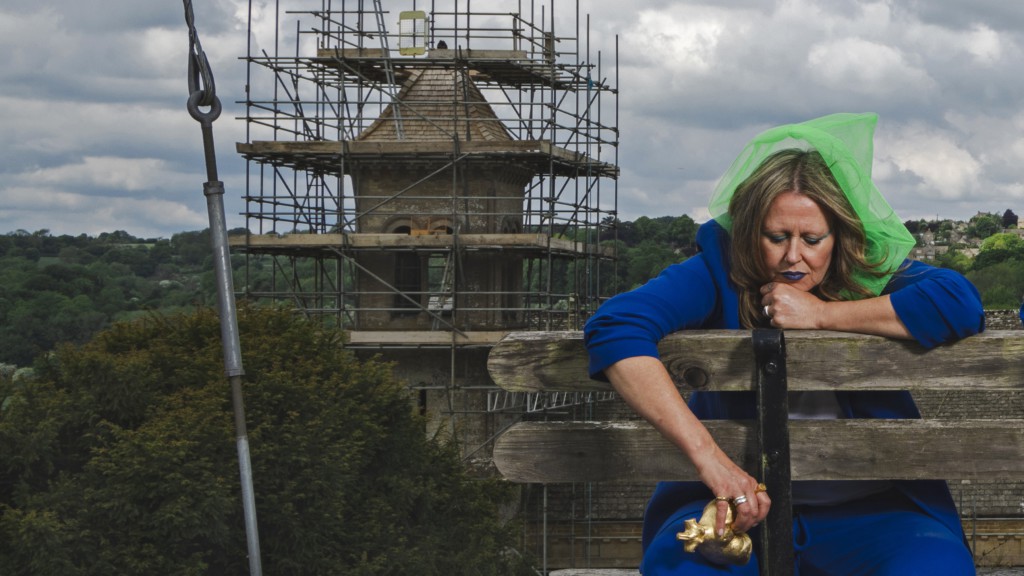
Photo Credit: Emilie Sandy
JLM Morton has won the Laurie Lee Prize, been longlisted for the Nan Shepherd prize and her nonfiction has been published in Caught by the River, Oxford Review of Books and Elsewhere: A Journal of Place. Her poetry has featured on BBC6 Music and is widely published, including in Poetry Review, Poetry London, Rialto, Magma, Mslexia and The London Magazine. Juliette is the winner of the Geoffrey Dearmer and Poetry Archive Worldview Prizes. Her debut poetry collection is Red Handed (Broken Sleep Books, 2024), highly commended by the Forward Prizes and a Poetry Society book of the year. Her second collection is forthcoming in 2026.
Add your Reply
You must be logged in to post a comment.