 Fawzia Kane
Our tutor Fawzia Kane discusses the poetic queries surrounding writing in Lent and Ramadan, as well as her upcoming course which delves into inner reflection and deep contemplation through poetry.
Both Lent and Ramadan involve periods of fasting and reflection. How do you think restrictions like these affect the way we pay attention to language and writing?
The ‘restrictions’ for both these periods appear outwardly physical – abstentions from certain corporeal needs meant to cultivate self-control and empathy. We can think of this as a kind of cleansing, both physical and spiritual.
The paradox of these constraints means that our non-physical universe is opened up. Once the body becomes accustomed to less-by-choice, our perception of the world sharpens. Our senses feel enhanced. Our emotions are heightened, and our thoughts become more focused. Yet here is where our written language tends to become sparser, an elegance of the austere.
This introspection can lead us to discover new colours in the subjects we examine (and re-examine), much like sea undercurrents that widen, branch and intertwine, the deeper we go.
In both of these religious holidays, people move from feasting and celebration into periods of contemplation. Can that shift in rhythm inspire new ways of writing or seeing the world?
The sequence of each phase for these 2 holy months differs. Lent comes after Carnival, a word derived from the Latin carn– (‘flesh’) & levare (‘put away’). The indulgence and revelry stops abruptly on Ash Wednesday. Lenten fast is a denial of some common pleasure.
Fasting- with no food or drink- is compulsory during Ramadan, which has an emphasis on prayer and charity. This lunar month ends with a celebration of Eid-Ul-Fitr, where families and friends gather.
The shifts in rhythm leading to and from these periods of contemplation affects our sense of time. Everything slows, enough to focus beyond the obvious around us. We can better observe this illusory state of being called life.
We begin to see behind the veil of our teeming world. The ordinary becomes extraordinary. Textures of sound and surface lift as the contrasts expose differences in tone and touch. The complexities of simplicity show themselves.
In your upcoming course, The Mirror of Masks: Bacchanalia to Contemplation Studio+, you explore moving from Bacchanal revelry to contemplation using cultural masks. How can adopting a “mask” in writing help us access parts of ourselves we might not usually express?
Sometimes, our deep subconscious is freer to express itself, when we speak in Another’s voice.
In the course, we examine the culture of masks – both tangible ones such as the traditions of Venice and Japanese Noh, and the intangible word-masquerade of theatre and folklore e.g. Trini Midnight Robbers.
From this, we’ll design and create our personal masks of Characters who are removed from our known selves. The new masks will not only be face coverings – we’re asked to design an entire costume and life scenario for our new Character. Our created Characters will connect with Others on the course, and these interactions will generate new poems in these discovered aliases and their voices.
Shifting between the persona of reveller and meditator seems central to your course. How can writers experiment with shifting perspectives, using voices or personae that are not their own, to deepen reflection during these periods?
The writing for this course is time specific. It can only happen at this time of year where we cross over from the indulgent noise of revelry into the quietude of restraint. This contrast is key to the work produced in this course.
We begin with the braggadocio of (Midnight) Robber Talk, and then move into more considered compositions during Lent and Ramadan. The contemplative rituals of these periods, together with the freedom of the poets to write in their mask-Character’s voices, would encourage hidden ideas to well up from our subconscious.
The mask-Character creations are intended to allow safer spaces for the poet to speak outside their comfort zones, to test out new and unfamiliar ways of expression in our writing.
Finally, do you have a favourite poem or writer that captures the feeling of moving from celebration into contemplation?
I’m fascinated by the scene in Euripides’ The Bacchae, when Agave, mother of Pentheus, the King of Thebes, realises she has killed her own son.
She had returned from what she thinks is a successful hunt, with a lion’s head in her hands. Then her father compels her to look again at what she is holding. This is the point where recognition dawns, and her voice moves from shock, to a slow crescendo of horror and pain.
In my course, we will look at 2 translations of this part of the text- Michael Cacoyannis‘ and Wole Soyinka‘s. The pace of this transition is different in these translations. Cacoyannis’ language is sparser, a staccato of frenzy into a collapse of realisation. Soyinka’s version is a slower pace. There is a sense of exhaustion in Agave’s final acceptance of her reality. The realisation is more gradual, but no less powerful.
Fawzia is teaching her Online course The Mirror of Masks: Bacchanalia to Contemplation Studio+ with us this Spring, starting on Tuesday 10 February. For more information and to secure your place please visit this page.
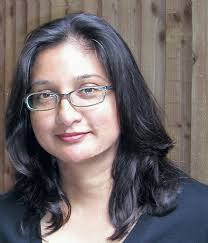
Fawzia Muradali Kane was born and grew up in Trinidad and Tobago. She is an architect and poet, now based in London. Her collection Guaracara (Carcanet) was published in 2025.
Add your Reply
You must be logged in to post a comment.